StoryShort AI Review: Strengths, Limitations, and Alternatives
The landscape of AI video generation has rapidly shifted from niche experimental tools to mainstream production suites.
As platforms compete to provide the fastest "text-to-video" experience, users are often left navigating a sea of automated options that promise professional results with minimal effort.
However, the reality of these tools frequently involves balancing automated speed with the creative control needed for high-quality storytelling.
What Is StoryShort AI?
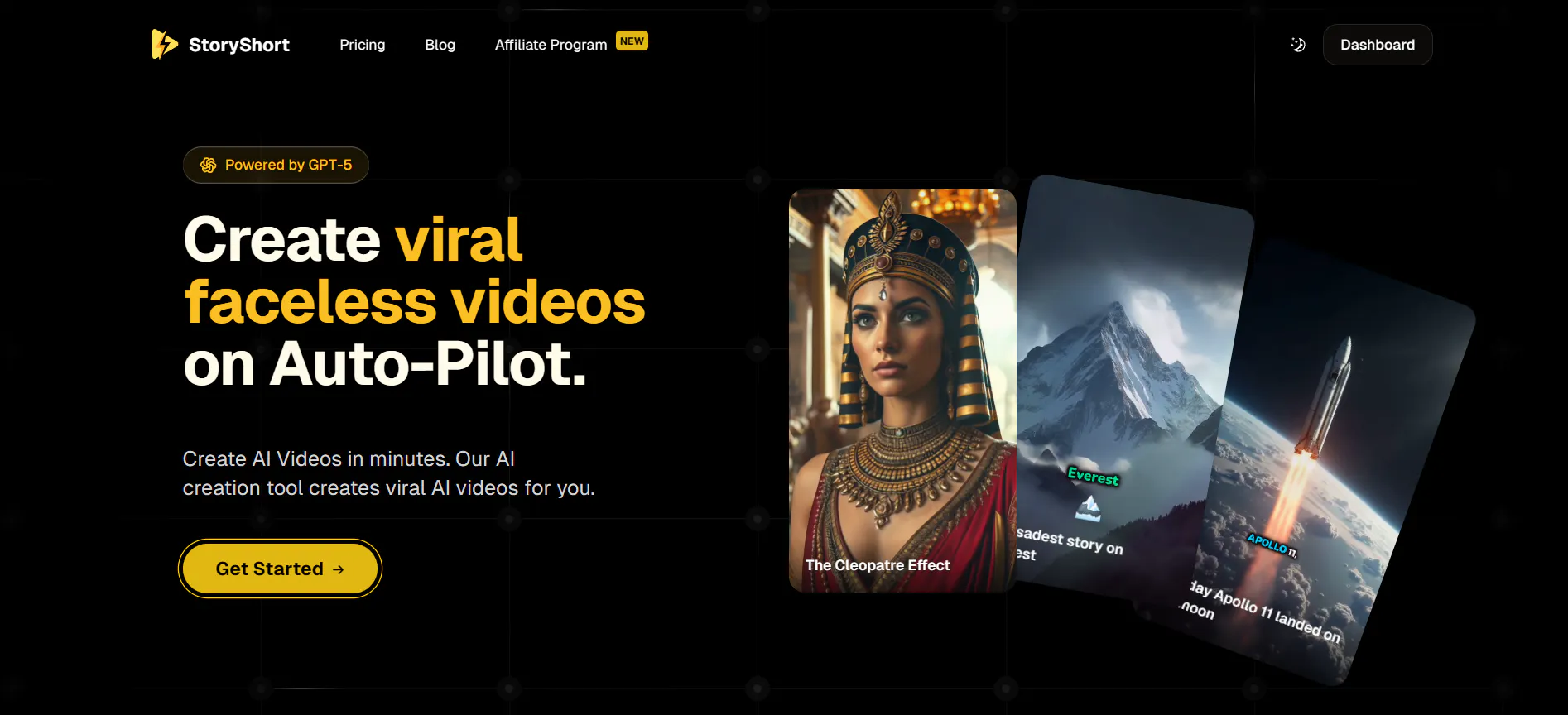
StoryShort AI is an AI video generation tool primarily focused on turning short scripts or ideas into vertical videos, often aimed at platforms like TikTok, Shorts, and Reels. Its core audience appears to be solo creators, faceless content channels, and users experimenting with automated storytelling formats.
The tool positions itself as a simple solution for creating short narrative videos with minimal effort. Rather than offering deep editing control, StoryShort AI emphasizes speed and automation. This makes it accessible for beginners, but also places clear limits on how much users can shape the final output.
Features of StoryShort AI
StoryShort AI typically works by having users input a short script or prompt, which the system then converts into a video with generated visuals, captions, and voiceover. The workflow is designed to be fast, with very few steps between idea and output.
While this approach reduces setup time, it also introduces several constraints. Visual styles are often repetitive, and scene transitions can feel generic or disconnected from the script. Users may find it difficult to maintain character or visual consistency across multiple videos, especially when building a series.
Customization options are relatively shallow. Adjusting pacing, camera movement, or visual emphasis is limited, and small prompt changes can lead to large, unpredictable shifts in output. As a result, creators may need to regenerate videos multiple times to get something usable, which reduces overall efficiency despite the tool’s automation-first design.
Pricing
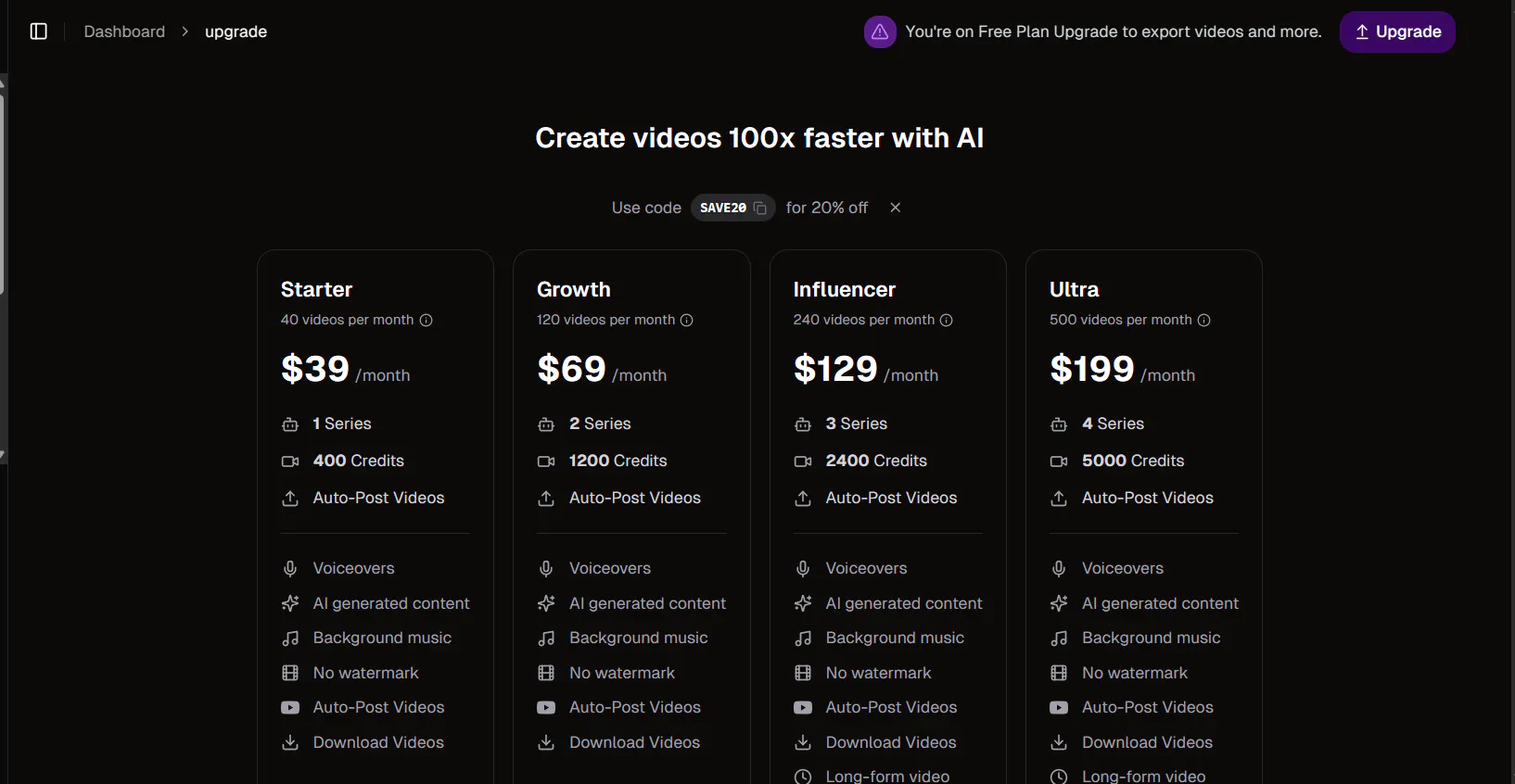
Free plan: limited access with usage caps and restricted features
Monthly plan: around $39–$199
Annual plan: around $468–$2388
Although the pricing is comparable to similar tools, the value-for-money may be questionable for users who need reliable, repeatable outputs. Frequent regeneration to fix inconsistencies can offset the time savings promised by automation.
Pros & Cons of StoryShort AI
Pros
- Extremely fast script-to-video workflow for faceless social media channels.
- All-in-one platform integrating voiceover, music, and captions.
- Competitive pricing for those who opt for the annual billing cycle.
Cons
- High inconsistency in visual style between scenes in the same video.
- Limited manual editing tools for creators who want specific timing or framing.
- The credit system can feel punitive when the AI fails to follow a prompt correctly.
- Background music and voiceover options can feel generic or overused.
- Rendering queues can sometimes be unpredictable during peak hours.
Videoinu AI vs StoryShort AI: Which Is the Better Video Generator?
When comparing StoryShort AI to videoinu AI, the differences in reliability and efficiency become clear. While StoryShort AI relies on an automated "black box" approach that can lead to inconsistent results, videoinu AI provides a much faster and more consistent generation process.
For creators who prioritize social media growth, videoinu AI offers a smoother experience for producing short-form content. It avoids the common "hallucinations" and character warping that can plague a megic light ai based system. Furthermore, videoinu AI maintains a higher level of temporal stability, ensuring that the motion in the video feels natural rather than jerky.
For those who want high-quality results without the frustration of burning through credits on failed iterations, videoinu AI stands out as the more logical choice for a professional production toolkit.
Other Popular StoryShort AI Alternatives for Video Generation
Bytedance-dreamactor
This tool focuses on high-fidelity character animation and motion transfer, allowing users to animate static characters with realistic movement based on reference videos.
Runway
A leader in the generative video space, Runway offers professional-grade tools like Gen-3 Alpha, providing deep control over camera movement and cinematic styles.
Hailuo AI
Hailuo is gaining traction for its ability to generate high-resolution video clips with impressive prompt adherence and fluid physics, suitable for both realistic and stylized content.
Kling AI
A powerful video model known for generating long-form AI clips with high temporal consistency and complex subject interactions that rival top-tier competitors.
Luma AI
Luma's Dream Machine is focused on high-speed, realistic video generation from text and images, offering a high degree of cinematic quality for storytelling.
FAQs
Is StoryShort AI easy for beginners?
The platform is designed to be very accessible, requiring only a simple text prompt to generate a full video, though mastering the "magiclight" style of prompting takes some practice.
Does StoryShort AI support multiple languages?
Yes, it offers various AI voiceovers in multiple languages, though the quality of the script translation and naturalness of the speech varies by language.
What is the credit cost for one video?
Typically, a "One-Click Story" consumes a set amount of credits depending on the length; however, users often search for magiclight ai tips to minimize credit waste during regeneration.
Can I upload my own images to the platform?
While the primary focus is on AI generation, the tool does allow for some level of media import, though it is not as robust as a traditional non-linear editor.