10 Best Wan AI Alternatives That I Tried and Actually Work
Wan AI has been a popular choice for making realistic videos, but it is not the only option anymore. In 2026, the world of AI is moving very fast. Many creators are looking for tools that offer more control, better characters, or simpler interfaces.
If you feel like Wan AI is too hard to use or doesn't give you exactly what you want, you are in the right place.
I spent the last month testing every major AI video tool I could find. I looked for tools that actually help you finish a project, not just waste your time. Below are the 10 best alternatives to Wan AI based on my own hands-on experience.
1.VideoInu AI
After trying many different apps, VideoInu AI has become my top recommendation for almost everyone. While Wan AI is good at making a single realistic clip, VideoInu is built for people who want to make a real story. It feels less like a complicated computer program and more like a creative partner that understands what you are trying to build.
One thing that really bothered me about Wan AI was that it was hard to keep things consistent. If I made a video of a girl in a red dress, and then tried to make another video of her walking, her face or the dress would change slightly. VideoInu solves this problem.
It is excellent at "Character Consistency." This means your characters look like the same person from the beginning of your video to the end. This is a game-changer if you are making a short film, a YouTube story, or an ad for a brand.
The interface is also very clean. You don't need to spend hours watching tutorials to understand how to use it. I used it to create a series of clips for a fantasy project, and I was amazed at how fast it worked. The motion is smooth, and the colors are vibrant. It bridges the gap between just having an idea and having a professional-looking video.
If you want a tool that grows with you and makes the process fun rather than frustrating, VideoInu is the winner.
Pros:
- Character Stability: It keeps your characters looking the same across different scenes.
- Very Easy to Use: You can start making videos within minutes of signing up.
- Great Animation: The movement is fluid and doesn't look like a glitchy AI mess.
- User-Focused: The features are clearly designed for people who make content every day.
Cons:
- Addictive Workflow: Once you start, it’s hard to stop because making things look this good is exciting.
- Cloud-Based: You need a decent internet connection to upload prompts and download your videos.
- Try Videoinu — a better alternative to Wan AI
2.Seedance
Seedance is a tool that I found specifically for music lovers. While Wan AI is more about general realism, Seedance is designed to make video that matches the rhythm of a song. If you have a beat, Seedance can make a world that dances to it.
I tested it by using a high-energy dance track. I asked the AI to create a neon city that pulses with music. The results were incredible—the buildings literally glowed and shifted in time with the drums.
It is a very specialized tool, but if you are making music videos or cool background visuals for a DJ set, it is much better than trying to force Wan AI to match a beat.
Pro
- Rhythm Matching: The AI automatically syncs the visual movement to your audio.
- Vibrant Energy: The videos feel alive and perfect for social media trends.
- Unique Look: It creates styles that feel very modern and "cool."
Cons
- Limited Narrative: It’s hard to tell a slow, serious story because the AI always wants to move to the beat.
- Very Niche: If you don't have music, you aren't getting the full value of the tool.
3.Video Ocean
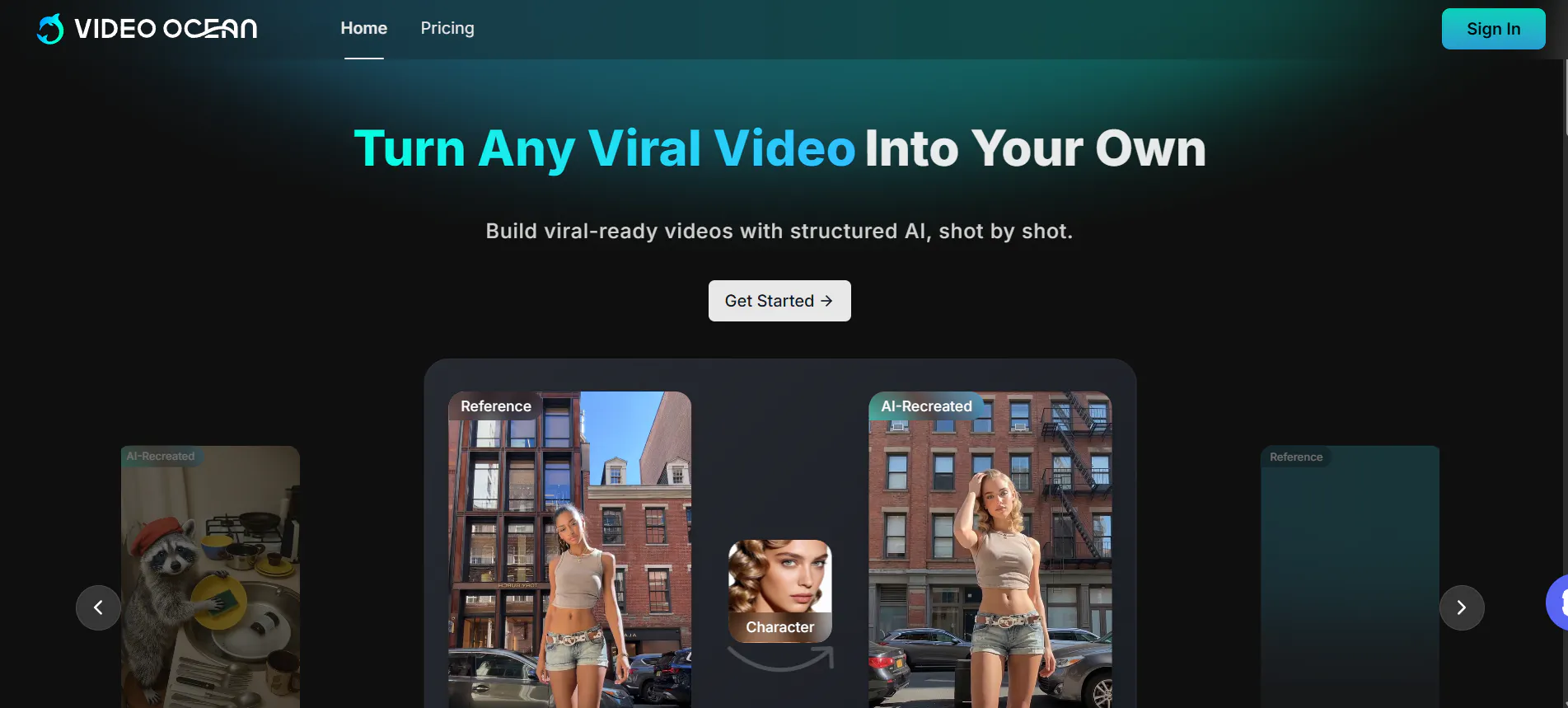
Video Ocean is like a giant playground for different art styles. When you use it, you feel like you have a million different cameras and paintbrushes at your fingertips. It doesn't just do one look; it does almost everything.
When I used Video Ocean, I loved that I could switch between "3D Cartoon" and "Classic Oil Painting" with just one click. It is great for people who are still trying to figure out the "look" of their project.
I used it to make a series of short clips for a school presentation, and it helped me keep everything looking artistic and consistent. It’s a very solid choice if you want to experiment with different aesthetics.
Pros:
- Huge Library: Tons of different artistic styles to choose from.
- Remix Feature: You can see what other people made and try to improve it.
- Beginner Friendly: Very few complicated settings to worry about.
Cons:
- Quality Spikes: Some styles look much better than others.
- Lower Realism: It is better for "art" than for making something that looks like a real-life video.
4.Stable Video Diffusion (SVD)
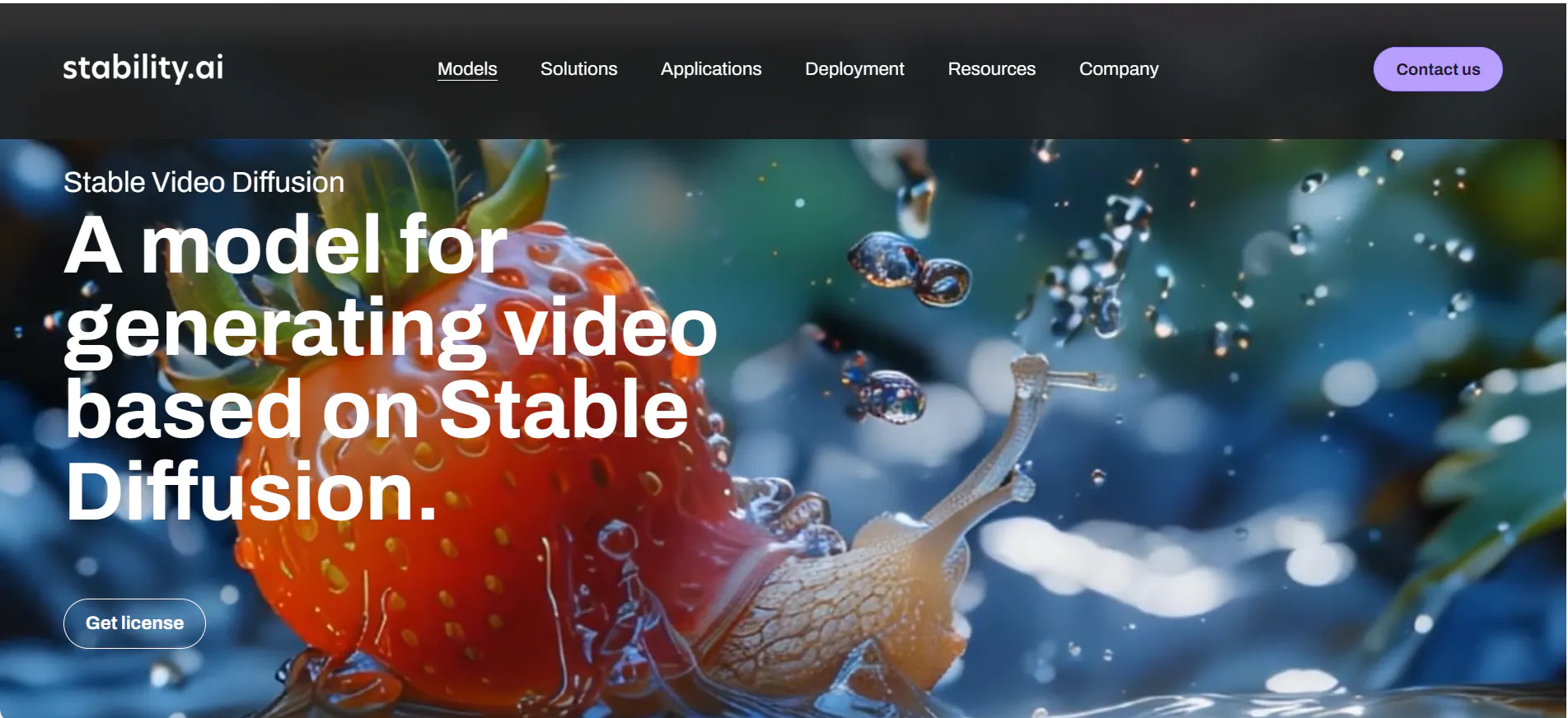
Stable Video Diffusion is a tool for the "tech-savvy" crowd. It is open-source, which means it is free to use if you have the right setup. It is very powerful, but it doesn't hold your hand like VideoInu does.
I ran this on my own computer to see what it could do. It is fantastic at "Image-to-Video."
I took a picture of a mountain range and SVD made the clouds move and the snow blow in the wind. It felt very "professional," but it took me a while to learn how to install it and get it working. If you are a student who loves to code or build your own computers, this is a great alternative.
Pros:
- Privacy: If you run it locally, nobody sees your videos but you.
- Free Potential: No monthly fees if you have your own hardware.
- Deep Customization: You can change almost every technical detail.
Cons:
- Very Difficult: Not for beginners; you need to know a bit about how AI software works.
- Hardware Cost: You need a very fast computer with an expensive graphics card.
5.StoryShort AI
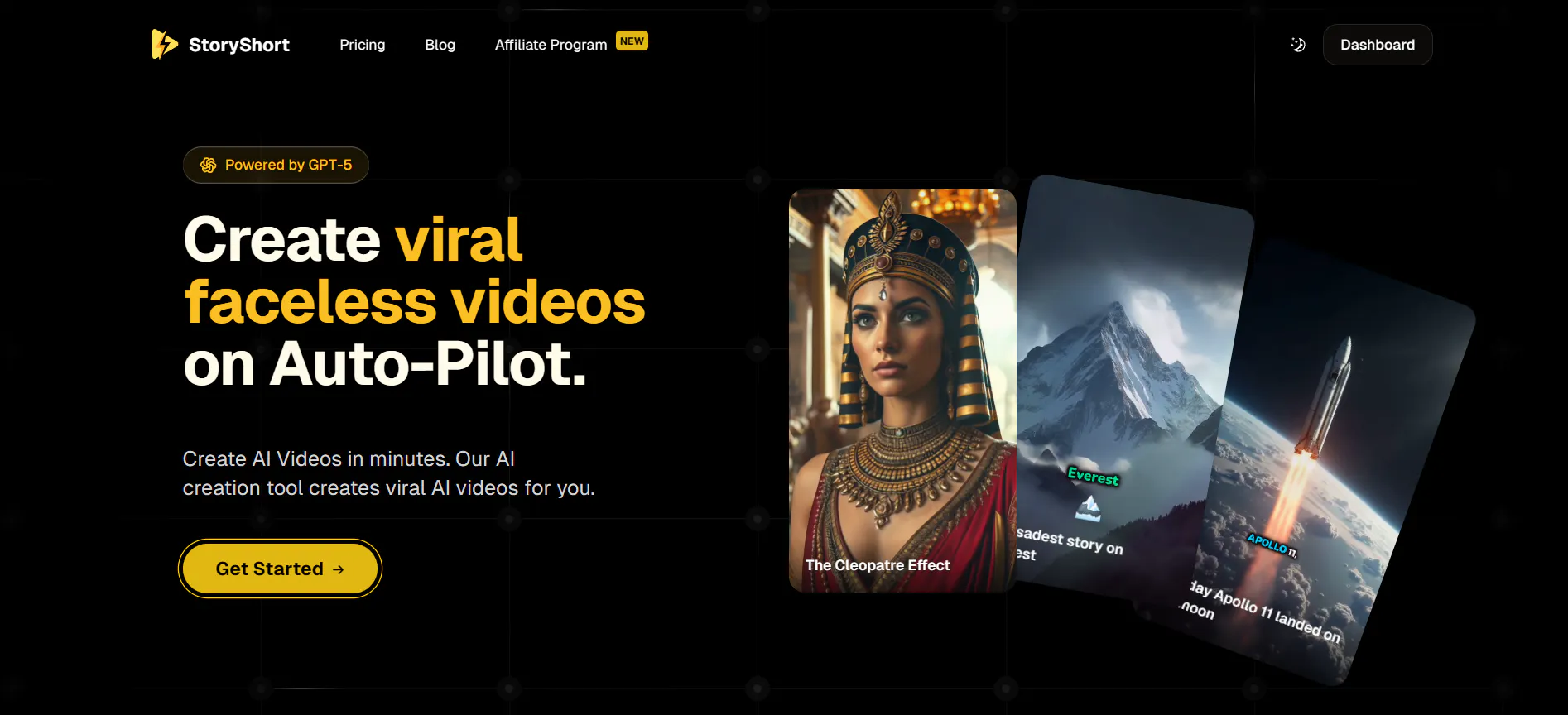
StoryShort AI is a specialized tool that I tried for making "faceless" social media videos. While Wan AI gives you a raw video file, StoryShort AI gives you a finished product. It is designed specifically for people who want to post daily on TikTok or YouTube Shorts without showing their face.
My experience with StoryShort AI was all about speed. You give it a topic, and it writes the script, finds the images, adds a voiceover, and even puts captions on the screen.
It is an "all-in-one" factory. I used it to make a 60-second "did you know" facts video. It wasn't as artistic as VideoInu, but it finished in less than three minutes. It’s the best alternative if your goal is to grow a social media channel quickly with high volumes of content.
Pros:
- Automation: It handles everything from the script to the final captions.
- Voiceover Quality: Uses very realistic human-like voices (like ElevenLabs).
- Direct Publishing: You can schedule your videos to post directly to social media.
Cons:
- Formulaic: The videos can sometimes feel a bit of a "cookie-cutter" or similar to each other.
- Less Creative Control: Since it does everything for you, you have fewer chances to change specific art details.
6.Hunyuan AI
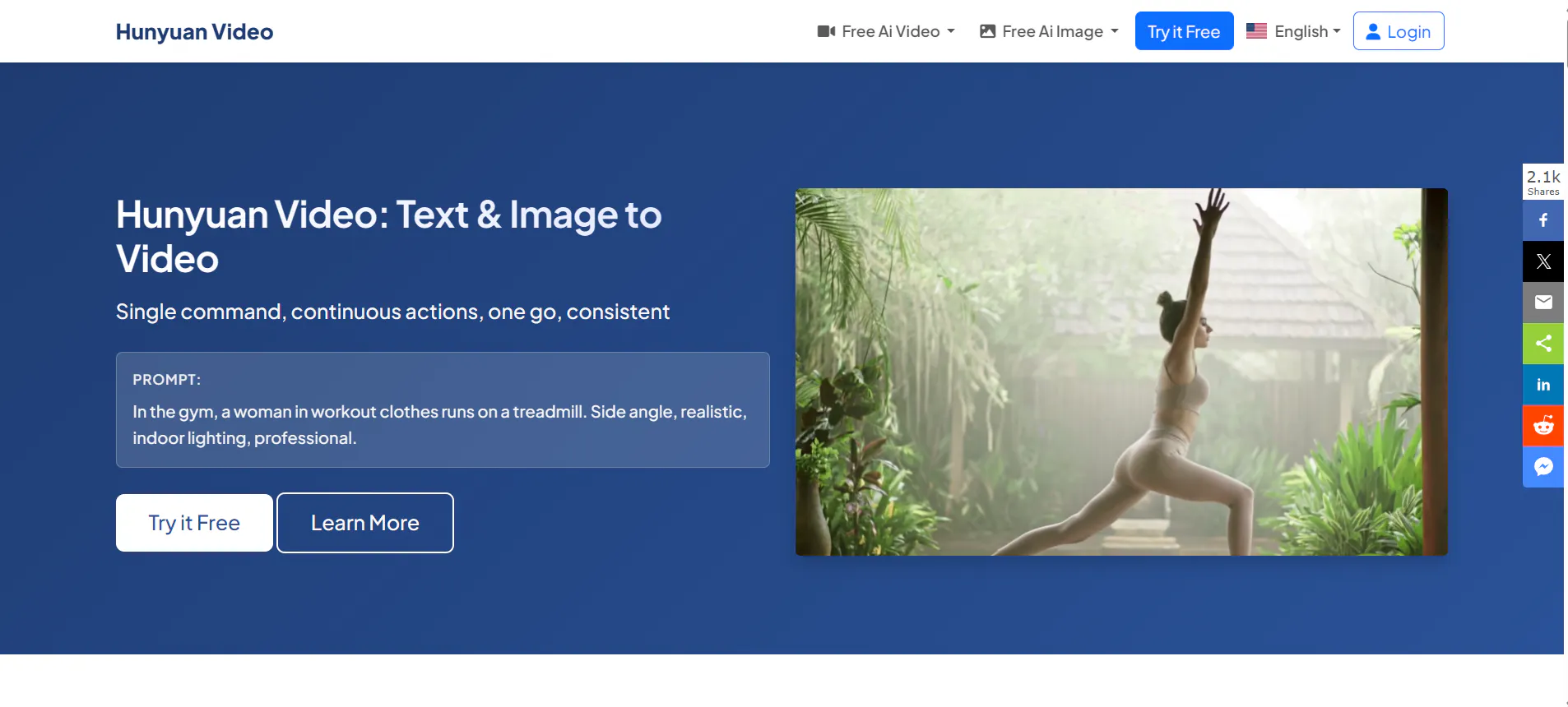
Hunyuan AI is a powerful model that really understands how a 3D world works. In 2026, its "HunyuanVideo" model has become a favorite for people who want videos that look structurally correct and logical.
When I tested Hunyuan, I was impressed by how it handled camera movement.
If I asked for a camera to fly through a window and turn around, the room didn't "melt" or change shape, which happens a lot with weaker AIs. It feels very stable and "solid." It’s an amazing alternative to Wan AI if you are making something like an architectural tour or a product showcase where things need to look exactly right from every angle. It feels very high-tech and "pro."
Pros:
- 3D Mastery: Objects and rooms stay consistent as the camera moves around.
- Sharp Quality: The videos look very high-definition and clean.
- Open Source Options: There are versions you can run yourself if you have the gear.
Cons:
- Harder to Prompt: You sometimes have to be very specific to get the best results.
- Slower Renders: It takes more time to process because the math is more complex.
7.Midjourney
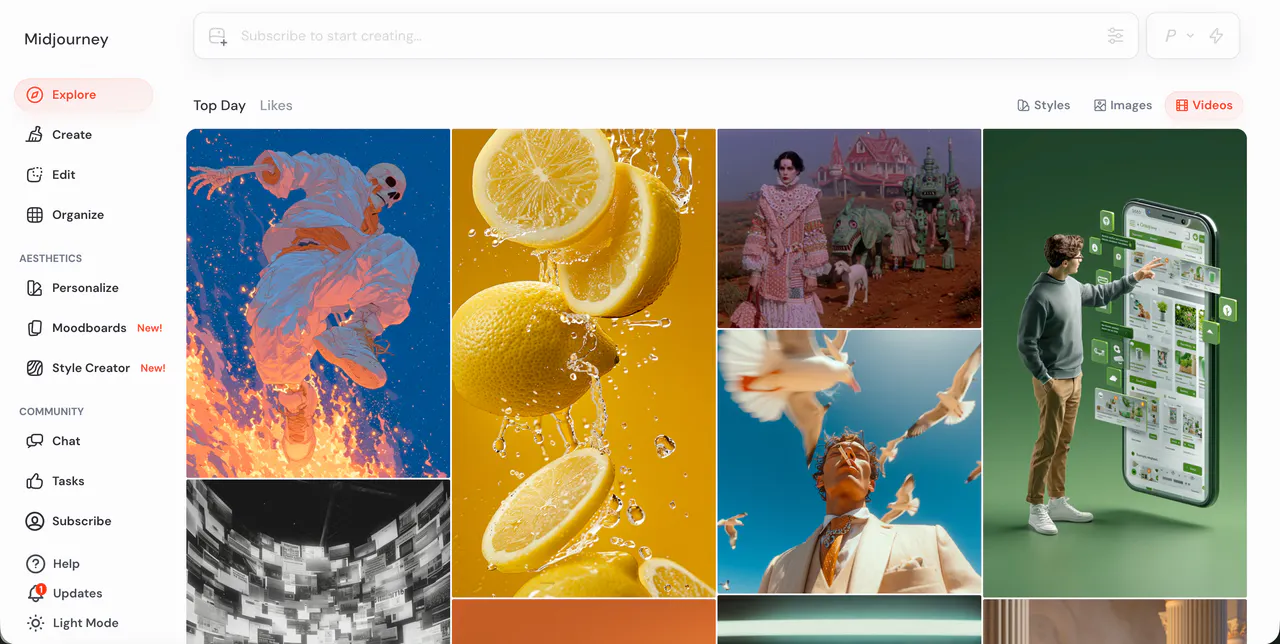
Midjourney is mostly known for being the king of AI images. However, in 2026, they have added some very cool video features. While it’s not a full video maker yet, the "motion" it can add to images is breathtaking.
I use Midjourney to create the "perfect" picture first. Then, I use their zoom and pan tools to make it move.
The artistic quality of Midjourney is still the best. If you want a video that looks like a moving painting or a high-end fashion photo, this is your tool. It’s a great alternative if you care more about beauty than about complex character movements.
Pros:
- Incredible Art: No other AI makes images this beautiful.
- Unique Styles: You can create styles that look like nothing else on the planet.
- Community: You can see what everyone else is making in a huge gallery.
Cons:
- Limited Video: You can't make a character do a specific action like "eating an apple."
- Discord Only: You still have to use the Discord app to make it work.
8.Bytedance Imitator
Bytedance Imitator is all about "copying." It’s a specialized tool from the people who made TikTok. Its main job is to take the movement from a real video and put it into an AI character.
I tested this by filming myself waving my arms and then uploading a picture of a robot. The AI made the robot wave its arms exactly like I did. It was amazing!
This is the best tool if you want to be the "actor" for your AI characters. It’s an alternative to Wan AI for people who want to control exactly how a character moves by doing the movement themselves.
Pros:
- Perfect Human Motion: Since it copies a real human, the movement looks 100% natural.
- Great for Avatars: Perfect for people who want to be virtual YouTubers or streamers.
- Very Fun: It’s almost like playing a video game where you are the character.
Cons:
- Limited Scope: It only works for things that a human can do (dancing, waving, talking).
- Requires Input Video: You have to record yourself first to make it work.
10.OiiOii.ai
OiiOii.ai is a tool that is focused on "talking." If you have a character and you want them to give a speech or tell a joke, this is the best tool I found. While Wan AI struggles with mouth movements, OiiOii specializes in them.
I uploaded a photo and a script, and the AI did the rest. The mouth moved perfectly with the words, and the character's eyes even blinked at the right times.
It is a fantastic tool for teachers, business people, or anyone who needs to make a "talking head" video without needing a real camera or actor.
Pros:
- Excellent Lip-Sync: The mouth movements match the audio or text perfectly.
- Emotional Faces: You can tell the character to look happy, sad, or serious.
- Fast: It doesn't take long to generate a talking video.
Cons:
- Simple Backgrounds: Usually, only the person moves, and the background stays still.
- Narrow Use: It’s only really for "talking" videos, not for action scenes.
Conclusion
The world of AI video is huge, and Wan AI is just the beginning. After my testing, I found that different tools are good for different things.
If you want the best all-around tool that helps you tell stories and keep your characters looking right, VideoInu AI is my top choice. If you want to make music videos, go with Seedance. If you want to make yourself into a cartoon, use Bytedance Imitator.
The best advice I can give you is to pick one that sounds fun and just try it. Most of these have free trials, so you have nothing to lose!
FAQs
1.Is VideoInu AI easier to use than Wan AI?
Yes! VideoInu AI is designed to be very simple for beginners. While Wan AI sometimes requires you to be an expert at writing long "prompts," VideoInu has a much friendlier interface that helps you get what you want without the stress.
2.Can I use these tools for my school projects?
Absolutely. Many students use these tools to make presentations, short films, or social media posts. They are a great way to show your ideas without needing a big budget or a Hollywood film crew.
3.Do I need to pay for all of these?
Most of the tools on this list have a "free" version or give you free credits when you sign up. For example, VideoInu and Pika often let you try the tool for free. If you want to make a lot of high-quality videos every day, you might eventually want to pay for a subscription.
4.Why do my AI videos sometimes look "glitchy"?
AI is still learning! Sometimes, if you ask for something too complicated, the AI gets confused and makes a "glitch." Tools like VideoInu and Hunyuan are generally better at keeping things stable, but every tool has a limit. Try simplifying your prompt if it looks weird.
5.Which tool is best for making characters talk?
If you specifically want a character to speak words clearly, OiiOii.ai is the best choice. It focuses specifically on matching mouth movements to voices, which is much better than a general tool like Wan AI for that specific task.